
 Save
Save
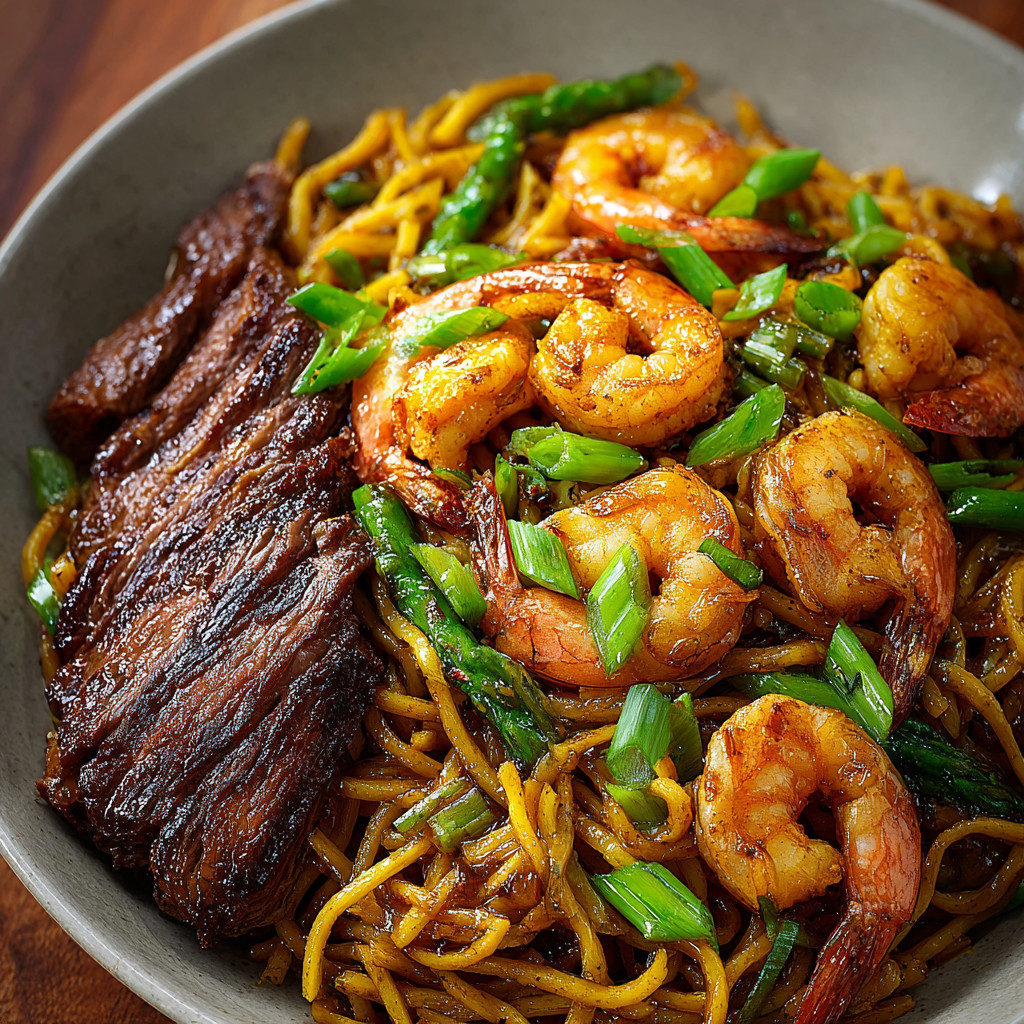
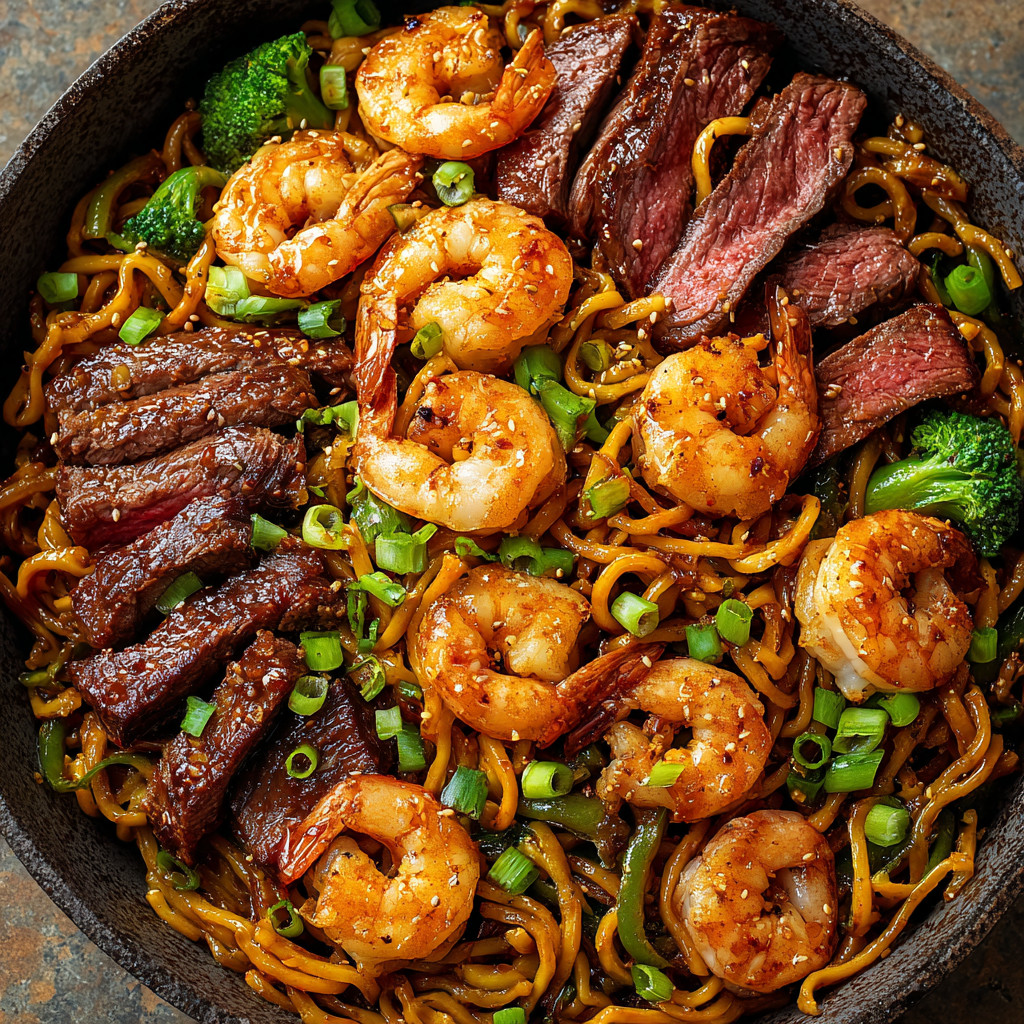
Steak and Shrimp Teriyaki Noodles turns an ordinary weeknight dinner into an irresistible meal that fills your kitchen with the sweet and savory aroma of sizzling steak and bubbling teriyaki sauce. This dish blends tender slices of steak, juicy shrimp, and glossy noodles all coated in a rich homemade teriyaki glaze. It’s a simple one-pan dinner that feels both indulgent and familiar, perfect for busy nights or when you want to impress without stress.
Ingredients
- Steak: Flank steak or sirloin works best for fast cooking and tender bites. Always slice against the grain to keep it juicy and easy to eat.
- Shrimp: Large raw shrimp, peeled and deveined, fresh or thawed frozen, sear nicely for a quick and flavorful protein addition.
- Noodles: Lo mein noodles, udon, or spaghetti hold onto the sauce well. For a low-carb option, substitute zucchini or shirataki noodles.
- Soy Sauce: Builds the salty backbone of the teriyaki flavor. Use low sodium if you want to reduce saltiness.
- Brown Sugar: Adds sweetness balancing the salty soy and depth. Honey or maple syrup can be used as alternatives if needed.
- Garlic: Fresh garlic is a must for bright aromatics and flavor complexity.
- Fresh Ginger: Adds warmth and a slight peppery note. Ground ginger can substitute but reduce the amount.
- Sesame Oil: A little oil adds an unmistakable nutty aroma essential for authentic taste.
- Vegetables: Bell peppers, broccoli, snap peas, carrots, and green onions contribute freshness, color, and texture contrast.
- Cornstarch: Thickens the sauce into a glossy coating that clings to noodles perfectly.
- Olive Oil or Neutral Cooking Oil: Used for searing steak and shrimp without burning, choose a high-heat oil.
Step-by-Step Instructions
- Prepare the Noodles:
- Bring a large pot of salted water to a boil and cook your chosen noodles just until al dente. Drain thoroughly and toss with a little oil to prevent sticking. Set aside while you get everything else ready.
- Slice the Steak:
- Using a sharp knife, slice the steak thinly against the grain. Slightly chilled steak slices easier and stays tender once cooked.
- Season and Sear the Steak:
- Heat a tablespoon of oil in a large skillet or wok over medium-high heat. Add the steak slices in a single layer without crowding. Let them cook undisturbed for 2 to 3 minutes until nicely browned, then flip and cook another 1 to 2 minutes until just cooked through. Remove the steak and set aside to rest.
- Cook the Shrimp:
- Add more oil to the skillet if needed. Place shrimp in a single layer and cook for 1 to 2 minutes on each side until pink, opaque, and lightly caramelized. Remove and set aside with the steak.
- Sauté the Vegetables:
- Add your vegetables to the hot skillet. Stir-fry for 3 to 5 minutes until tender-crisp and vibrant in color with some caramelized edges for flavor contrast.
- Make the Teriyaki Sauce:
- In a bowl, whisk together soy sauce, brown sugar, minced garlic, grated ginger, sesame oil, cornstarch, and a splash of water. The mixture will look thin but will thicken when cooked.
- Simmer the Sauce:
- Pour the sauce into the skillet with vegetables. Stir constantly over medium heat as it simmers. In 1 to 2 minutes, it will thicken into a glossy, fragrant glaze that clings to the back of a spoon.
- Return the Protein to the Pan:
- Add the cooked steak and shrimp back into the skillet. Toss gently to coat each piece evenly with the teriyaki sauce.
- Add the Noodles:
- Add the noodles to the skillet and use tongs to toss everything together until noodles are coated and shiny, and the steak and shrimp are well distributed.
- Finish and Garnish:
- Adjust seasoning with a splash of soy sauce if needed. Top with sliced green onions and sesame seeds for a fresh, pretty finish. Serve immediately while hot.
 Save
Save
Storage Tips
Store any leftovers in an airtight container in the refrigerator for up to four days. Flavors deepen making next-day servings even better. To reheat, gently warm the noodles with steak and shrimp in a skillet adding a small splash of water to loosen the sauce. If freezing, separate protein and noodles to preserve texture. Fresh noodles added after thawing keep the dish tasty.
Ingredient Substitutions
Use chicken breast instead of steak for a lighter option. Swap brown sugar with honey or maple syrup for a different sweetness profile. For gluten-free, choose tamari or a gluten-free soy sauce and gluten-free noodle alternatives. If you want a spicy kick, add crushed red pepper flakes or chili paste to the sauce. No fresh ginger on hand? Ground ginger works fine but use less since it is more concentrated.
Serving Suggestions
Serve with crisp cucumber salad, steamed edamame, or simple Asian slaw to balance the rich noodles. For a crunchy side add egg rolls or spring rolls. Miso soup or a light broth is a lovely starter to round out the meal. For holiday meals or guests, pair with fried rice, sesame-flavored green beans, or roasted broccoli.
Pro Tips
Make sure the skillet is hot before adding steak and shrimp for a good sear and caramelization. Don’t skip tossing the cooked noodles with a little oil after draining so they stay separate when you add them to the pan. Taste the sauce before tossing everything together. Adjust brown sugar or soy sauce as desired for your perfect sweet and salty balance.
Common Recipe Questions
- → What cut of steak works best?
Flank steak or sirloin are ideal for quick cooking and tenderness. Slice thinly against the grain for the best texture.
- → Can I use frozen shrimp?
Yes, just fully thaw and pat dry before cooking to ensure a good sear and avoid steaming.
- → How do I prevent noodles from sticking?
After cooking noodles al dente, toss them lightly with a bit of oil and drain well before combining with other ingredients.
- → Is this dish naturally spicy?
The sauce balances sweet and savory flavors without heat, but you can add chili flakes or chili paste for a spicy kick.
- → Can I make a low-carb version?
Swap traditional noodles with zucchini or shirataki noodles, and reduce sugar slightly for a lighter dish.
- → How should leftovers be stored?
Keep leftovers in an airtight container in the fridge for up to 3–4 days. Reheat gently with a splash of water or broth to loosen the sauce.